How Much Protein Do You Need to Build Muscle?
Most lifters get the full benefit at about 1.6 g of protein per kg a day. Here's the evidence, the numbers by bodyweight and how to split it across meals.
The Helthy team · · 9 min read
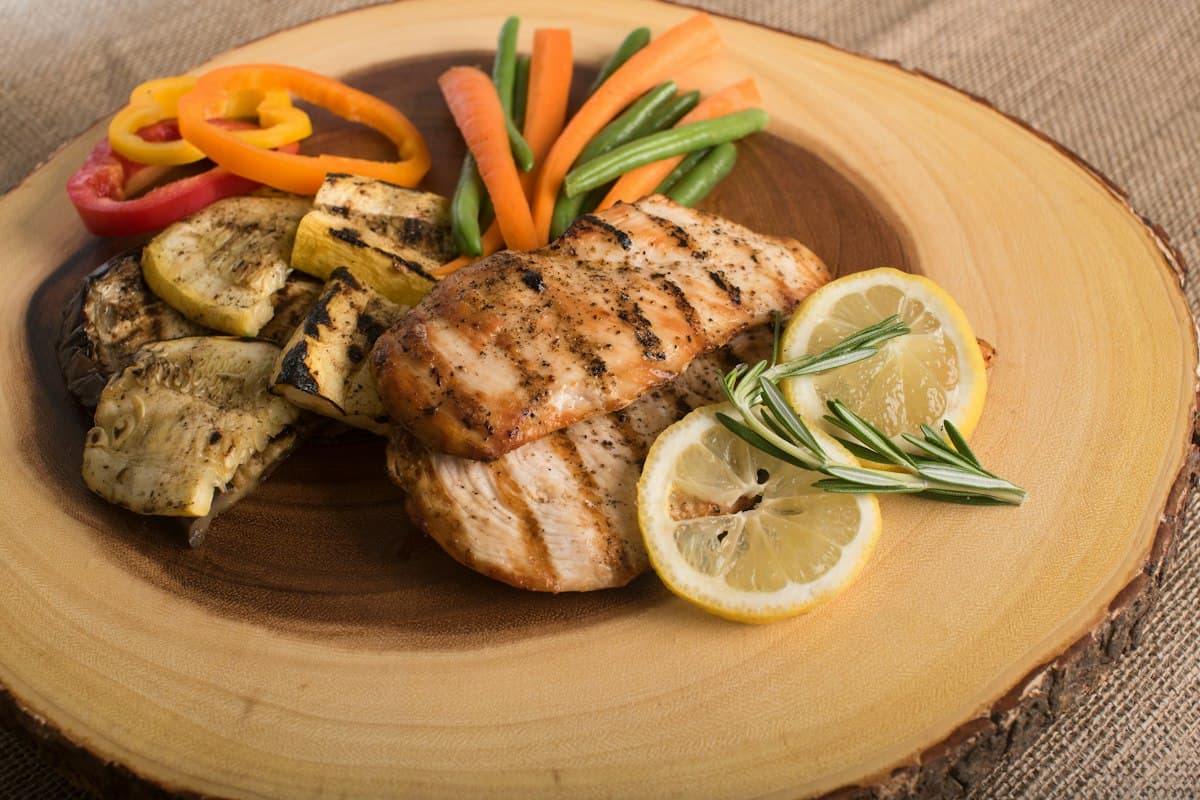
"One gram per pound" is the number most lifters hear first, usually followed by the question of whether they really need to eat that much chicken. You don't. But you do need a lot more than the standard nutrition advice.
The short answer: aim for about 1.6 g of protein per kg of bodyweight a day (0.7 g per lb) if you're lifting to build muscle. Going up to about 2.2 g/kg (1 g per lb) is fine and helps a little in some situations, mainly when you're dieting, but most of the benefit is already in by 1.6. Spread it over three to five meals and you've covered what matters.
For a 150 lb (68 kg) lifter that's about 110 g a day. For a 200 lb (91 kg) lifter, about 145 g.
How much protein do you need per day to build muscle?
The official recommended intake for adults is 0.8 g per kg. That figure is set to keep almost everyone out of deficiency, and it was never meant as a target for people trying to add muscle. If you train hard with weights, the research points to roughly double it.
We'd aim a little above 1.6 g/kg, somewhere around 1.8, and that's what our protein calculator uses. The reason is practical rather than scientific: 1.6 is an average, and you won't hit your number every day. Aiming slightly high means your bad days still land in a useful place.
Past about 2.2 g/kg, we think you're mostly paying for protein you don't need. It costs more than carbs, it takes up calories you could spend elsewhere, and it's very filling, which is great on a diet and annoying when you're trying to eat enough to grow.
Think of protein as bricks and training as the builder. Without enough bricks, the builder stands around. Once there's a steady pile on site, dumping a second truckload doesn't make the wall go up any faster; the builder was the limit all along.
Where the 1.6 g/kg figure comes from
The most cited source is a 2018 meta-analysis led by Robert Morton and Stuart Phillips in the British Journal of Sports Medicine. It pooled 49 randomised trials with 1,863 participants, all doing resistance training for at least six weeks, and compared people who added protein with people who didn't.
Extra protein helped, but modestly. On average it added about 0.3 kg (under a pound) of lean mass and about 2.5 kg to one-rep max strength over training alone. The gains levelled off at a total intake of around 1.6 g/kg a day.
The limits are worth knowing:
- The plateau point is an estimate with a wide range. The statistical uncertainty around 1.6 stretched up to about 2.2 g/kg, which is why careful coaches give 1.6 as the default and 2.2 as a sensible ceiling rather than one magic number.
- Most trials were a few months long, and many used people new to lifting, who gain muscle on almost anything.
- The effect was smaller in older participants and larger in people who already trained.
So here's the honest caveat: nobody, us included, can tell you exactly where your own plateau sits. Some people probably do fine on 1.4 g/kg and some keep benefiting up to 2.0. The 1.6–2.2 range covers most of them, and the difference between the two ends is small next to the difference between training consistently and not.
Protein targets by bodyweight
| Bodyweight | RDA (0.8 g/kg) | Default (1.6 g/kg) | Upper end (2.2 g/kg) |
|---|---|---|---|
| 120 lb (54 kg) | 44 g | 87 g | 120 g |
| 150 lb (68 kg) | 54 g | 109 g | 150 g |
| 180 lb (82 kg) | 65 g | 131 g | 180 g |
| 200 lb (91 kg) | 73 g | 145 g | 200 g |
| 240 lb (109 kg) | 87 g | 174 g | 240 g |
The upper end works out to almost exactly 1 g per lb, which is where the gym rule of thumb comes from. It isn't wrong, it's just the top of the useful range.
If you're carrying a lot of body fat, work from your goal weight instead. Someone at 280 lb (127 kg) aiming for 200 lb doesn't need 280 g of protein a day; fat tissue doesn't need feeding the way muscle does. Using the goal weight gives a number you can actually eat.
How much protein per meal?
Daily total matters most. How you split it is a second-order detail, and the evidence for it is weaker, but it's easy to get right.
You've probably heard that your body can only "use" 30 g at a time. That idea comes from lab studies that gave people a single dose and measured muscle building over the next few hours. In young adults the response flattened out somewhere around 20–40 g. More recent work that measured for longer, after bigger doses, suggests the body keeps putting that protein to use over a longer window. You absorb nearly all of it either way, so a 60 g dinner isn't wasted. It's just less efficient per gram than two 30 g meals.
A simple default comes from a 2018 review by Brad Schoenfeld and Alan Aragon: about 0.4 g per kg per meal, across at least four meals. That lands you on 1.6 g/kg for the day without any single meal being huge.
Here's what that looks like for our two example lifters. Protein figures are rounded and brands vary, so check your own labels.
| Meal | 150 lb (68 kg) lifter | 200 lb (91 kg) lifter |
|---|---|---|
| Breakfast | 2 eggs, 150 g Greek yogurt (~27 g) | 3 eggs, 200 g Greek yogurt (~38 g) |
| Lunch | Tuna sandwich with a whole can (~30 g) | Wrap with 150 g chicken breast (~50 g) |
| Snack or after training | 200 g cottage cheese (~22 g) | Whey shake made with milk (~34 g) |
| Dinner | 100 g chicken breast with rice (~34 g) | 150 g salmon with rice (~38 g) |
| Total | ~113 g | ~160 g |
The 150 lb lifter needs about 27 g per meal (0.4 × 68). The 200 lb lifter needs about 36 g (0.4 × 91) and overshoots slightly at lunch, which is fine. Neither day involves anything unusual.
Don't stress about the "anabolic window" either. If you had a protein-rich meal in the few hours before training, the post-workout shake is optional. We'd put that energy into hitting the daily number, because that's what the long-term trials actually tracked.
Do you need more protein when cutting?
Yes, a bit. In a calorie deficit your body is more willing to break down muscle for energy, and more protein plus hard training is the best protection you have. Protein also keeps you fuller per calorie than carbs or fat, which makes the diet easier to live with.
Aim for the top half of the range when you're cutting: roughly 1.8–2.2 g/kg (0.8–1 g per lb). The leaner you are and the bigger the deficit, the more it matters. A 2014 review by Eric Helms and colleagues suggested 2.3–3.1 g per kg of lean mass for lean, trained lifters dieting down. For an 80 kg (176 lb) lifter at 15% body fat, that's about 156–211 g a day. That range came from a small number of studies, mostly on athletes, so treat the top of it as a ceiling for contest-lean dieters, not a starting point for everyone else.
If you're setting up a cut from scratch, our guide on how many calories to eat to lose weight covers the deficit side.
Protein for older lifters
Older muscle responds less to the same dose of protein, a pattern researchers call anabolic resistance. It's one reason the Morton meta-analysis found a smaller benefit from extra protein in older participants. It doesn't mean protein matters less. It means the per-meal dose has to be bigger to get the same effect.
If you're over about 60, we'd do three things:
- Don't go below 1.6 g/kg. The low end of the range is your floor, not your target.
- Make each meal count. Aim for 30–40 g at each of your main meals, rather than a small breakfast and one large dinner. Breakfast is where the shortfall usually is.
- Keep lifting. Protein without resistance training does very little for muscle at any age, and the training is the part older adults most often drop.
Appetite often shrinks with age too. Milk, yogurt, cottage cheese and shakes pack a lot of protein into a small, easy volume, which is why we'd lean on them here.
Can you build muscle on plant protein?
Yes. Plant proteins are, on average, a little less digestible and lower in leucine (the amino acid most tied to switching on muscle building) than animal proteins. Individual sources can also run low on one amino acid: grains on lysine, beans and lentils on methionine. Eating a mix across the day solves most of that.
A 12-week trial published in 2021 compared young, untrained men on a vegan diet (topped up with soy protein) against omnivores (topped up with whey), both at about 1.6 g/kg a day. They gained similar muscle size and strength. The limits: the men were beginners, the study was short, and protein was matched on purpose, so the vegans were deliberately hitting a target many plant-based eaters don't reach on their own.
In practice, aim for the higher end of the range (around 1.8–2.0 g/kg) and lean on the densest sources: tofu and tempeh, seitan, soy milk, lentils and beans, and a soy or pea-rice protein powder. A 200 g block of firm tofu has somewhere around 25–30 g depending on the brand; a cup of cooked lentils has about 18 g, which is useful but takes more food to get there.
Is a high-protein diet bad for your kidneys?
For people with healthy kidneys, intakes in the 1.6–2.2 g/kg range haven't been shown to cause kidney damage. Eating more protein does raise how hard your kidneys filter, which is where the worry comes from, but that's a normal response to a bigger workload, not a sign of harm.
The exception is real, though. If you have chronic kidney disease, have one kidney, or a blood test has flagged reduced kidney function (a low eGFR), don't raise your protein on your own. Ask your doctor or a renal dietitian, because the advice for you is genuinely different.
Do you need protein powder?
No. Food works exactly as well. But a scoop of whey or a plant blend is usually the cheapest and easiest 20–25 g you'll find, and we'd rather you drink a shake than miss your number three days a week. If you already hit your target with meals, skip it and spend the money on food you enjoy.
What we'd do if you're starting today
Work out your number with the protein calculator, then log what you eat for a week before changing anything. Most people's guess at their own protein intake is off, and it's much easier to fix a specific gap ("breakfast is 8 g") than a vague sense of not eating enough. In Helthy, protein is one of the four goal cards on the Home screen, so by mid-afternoon you can see whether dinner needs to carry more.
If you're lifting three or four times a week and eating around maintenance, 1.6–1.8 g/kg split over four meals is all you need. Move toward 2.2 if you're cutting, lean, or over 60. And if you're currently eating closer to 1 g/kg, getting to 1.6 is the whole win; the last 20 g above that is the least important protein you'll ever eat.