Eating and Training on a GLP-1: How to Keep Your Muscle
On Ozempic, Wegovy, Mounjaro or Zepbound? Here's how much protein to eat when you're barely hungry, and the simple lifting plan that protects your muscle.
The Helthy team · · 10 min read
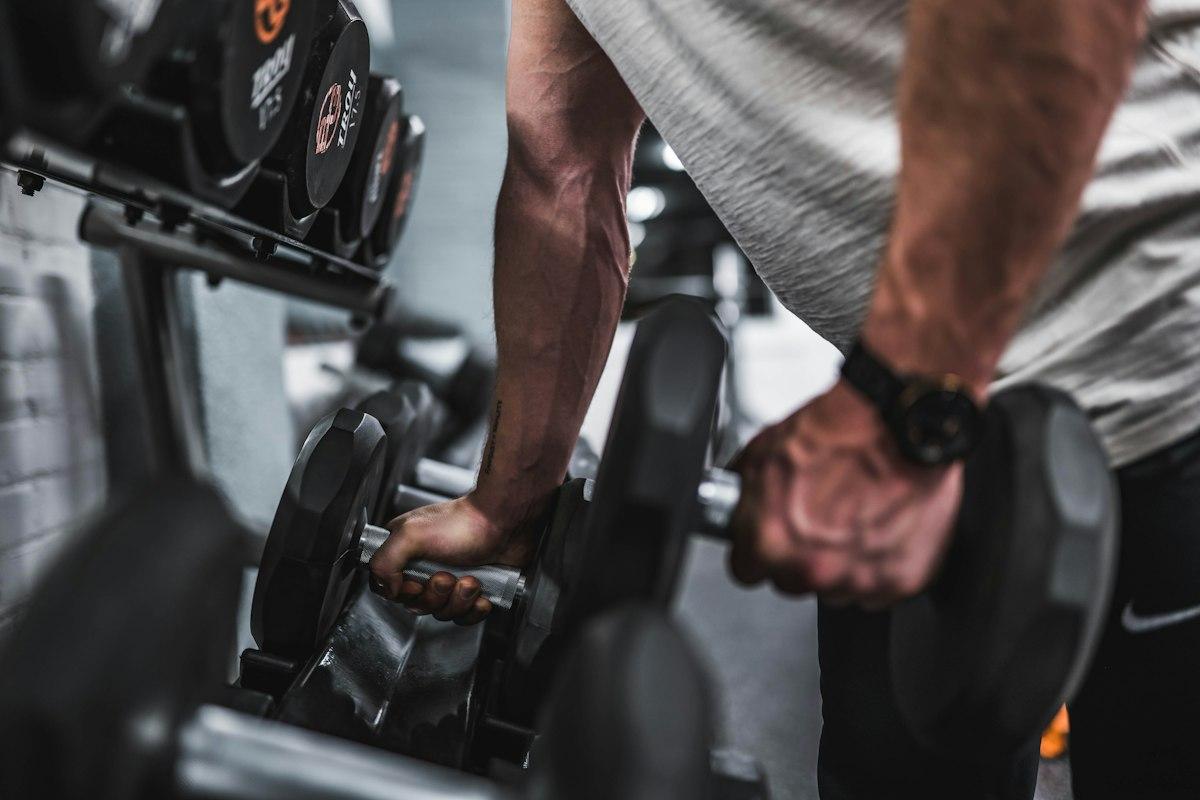
"I'm barely hungry anymore, so do I still need to worry about protein?" If you're on semaglutide (Ozempic, Wegovy) or tirzepatide (Mounjaro, Zepbound), then the answer is yes, even more than before.
The short answer: make protein and lifting the two things you don't skip. A practical starting target is about 1.6 g of protein per kg of your goal weight per day (or about 0.7 g per lb), eaten first at meals, plus 2 or 3 full-body strength sessions a week. For someone aiming to weigh 175 lb (79 kg), that's about 125 g of protein a day, or roughly 20–25 g across five or six small meals.
These drugs make it easier to eat less. Protein and lifting give you some control over how much muscle you keep, though they can't guarantee you'll keep all of it.
Why you lose muscle on a GLP-1 (and on any big diet)
A GLP-1 medication doesn't dissolve muscle. What it does is turn down appetite hard enough that many people end up in a large, fast calorie deficit. Any large, fast deficit will cost you some lean mass, whether it comes from a drug, a crash diet or surgery.
When energy is short, your body breaks down some protein for fuel, and muscle is the biggest store it has. A smaller body also needs less muscle to carry around, so without a reason to keep it (lifting), it doesn't.
The old rule of thumb from diet research is that roughly a quarter of the weight people lose is lean mass, and that share goes up when the deficit is big, protein is low and you're not lifting. "Barely hungry" usually takes care of the first two on its own.
What the GLP-1 trials found about muscle loss
The two headline trials were STEP 1 (semaglutide, about 2,000 adults, 68 weeks) and SURMOUNT-1 (tirzepatide, about 2,500 adults, 72 weeks). Both produced far more weight loss than placebo, and both ran body scans (DXA, the kind used for bone density) on a small subgroup to see what that weight was made of.
Across these and similar trials, lean mass made up somewhere between roughly a quarter and two-fifths of the weight lost, with the semaglutide subgroup toward the top of that range and the tirzepatide subgroup toward the bottom. Fat still made up most of the loss, and because fat fell faster than lean mass, people's lean mass as a share of their body weight actually went up.
There's debate about what those numbers mean:
- The subgroups were small: each scan group was well under 200 people.
- "Lean mass" isn't the same as muscle. DXA counts everything that isn't fat or bone, including water, the glycogen stored with it, and organs like the liver, which shrinks as it loses fat. Some of the loss recorded isn't muscle at all.
- None of them were asked to lift or hit a specific protein target. Participants got standard diet and activity counseling, so the trials show what happens by default, not what's possible.
A separate 2026 study in JAMA Network Open, Body Composition Changes After Bariatric Surgery or Treatment With GLP-1 Receptor Agonists, examined records from 1,257 surgery patients and 1,809 people prescribed semaglutide or tirzepatide at one medical center. Over 24 months, both groups lost more fat than fat-free mass. But this was an observational study using electrical-impedance measurements, not DXA, and the groups weren't directly comparable. It doesn't establish that surgery and medication cause the same muscle loss.
Our view: don't treat one lean-mass percentage as your personal forecast. These measurements don't isolate muscle, and the people in the trials weren't all training like you. Some muscle loss is a risk worth acting on; protein and lifting are the practical response.
How much protein do you need on a GLP-1?
Our guide to how much protein you need to build muscle uses 1.6–2.2 g/kg for people who lift, with the top half useful during a diet. That's a starting framework here, not a protein dose proven specifically in GLP-1 trials.
There are two adjustments for people on these drugs.
First, base it on your goal weight, not your current one. If you have a lot of fat to lose, a target based on today's weight gives you a number you physically can't eat, and fat tissue doesn't need feeding the way muscle does.
Second, pick a target you can actually eat. We'd rather you land near 1.6 g/kg consistently than aim for 2.2 and manage 1.1 because each meal is four bites. If your appetite allows more, work toward 1.8–2.2.
The honest caveat: the big drug trials didn't set or test these protein targets. They're borrowed from general dieting and training research, and goal weight is a practical way to scale them, not a proven best method for everyone. If you have kidney disease, ask your doctor before raising protein; your target needs individual advice.
A worked example
Say you weigh 240 lb (109 kg) and your goal is 175 lb (79 kg).
- Based on current weight: 1.6 × 109 = about 174 g a day. On a suppressed appetite, that's unrealistic.
- Based on goal weight: 1.6 × 79 = about 126 g a day. Up to about 145 g (1.8 g/kg) on good days.
Split over six small eating times, 126 g is about 21 g each. Here's one way it looks:
- Breakfast: 200 g (7 oz) plain Greek yogurt, about 20 g.
- Mid-morning: a ready-to-drink protein shake, about 25 g.
- Lunch: 3 oz (85 g) canned tuna on a few crackers, about 20 g.
- Afternoon: 2 hard-boiled eggs and a stick of string cheese, about 19 g.
- Dinner: 3 oz (85 g) chicken breast with a few bites of rice and vegetables, about 26 g.
- Evening: ½ cup (113 g) cottage cheese, about 13 g.
That's about 123 g, close enough, and every portion is a small meal, which is the point.
High-protein foods that are easy to eat
When you're full after a few bites, the best foods pack a lot of protein into a small, soft or drinkable volume. Protein figures are approximate and brands vary, so check your labels.
| Food | Serving | Protein (approx.) |
|---|---|---|
| Protein shake (ready to drink) | 1 bottle | 20–30 g |
| Plain Greek yogurt or skyr | 170 g (6 oz) | 15–18 g |
| Cottage cheese | ½ cup (113 g) | 12–14 g |
| Chicken breast, cooked | 3 oz (85 g) | about 26 g |
| Canned tuna or chicken | 3 oz (85 g), drained | 18–22 g |
| White fish (cod), cooked | 3 oz (85 g) | about 19 g |
| Eggs | 2 large | about 12 g |
| Firm tofu | 100 g (3.5 oz) | 12–15 g |
| String cheese | 1 stick | 6–8 g |
| Milk (dairy or soy) | 1 cup (240 ml) | 7–8 g |
We'd lean on shakes, yogurt and cottage cheese more than you might on a normal diet. Liquids and soft foods are generally easier to get down when you're queasy, and a 25 g shake beats a chicken breast you can only down a third of.
Why strength training matters more on a GLP-1
Protein gives your body the material to keep muscle; lifting gives it the reason.
The best evidence comes from diet studies rather than the drug trials. In a 2017 trial in the New England Journal of Medicine, Dennis Villareal and colleagues assigned 160 older adults with obesity either to a control group or to six months of a calorie-reduced diet plus aerobic exercise, resistance training, or both. The three diet groups lost similar amounts of weight, but the two that lifted lost noticeably less lean mass than the cardio-only group. The limits matter: participants were 65 or older, this wasn't a GLP-1 trial, and it lasted only six months.
If keeping muscle is the priority and you only have time for one kind of exercise, we'd pick lifting. It trains the strength you're trying to keep. Walking is a useful addition for your heart, mood and general activity, but it doesn't replace progressively loading your muscles.
A simple 2–3 day starting plan
Alternate two full-body workouts, with at least a day off between sessions. On two days a week, do A then B. On three, go A, B, A one week and B, A, B the next.
Workout A
- Goblet squat: 2–3 sets of 8–12
- Dumbbell bench press: 2–3 sets of 8–12
- Dumbbell row: 2–3 sets of 10–12 per arm
- Hip thrust: 2–3 sets of 10–12
Workout B
- Leg press: 2–3 sets of 10–12
- Push-up (hands on a bench if needed): 2–3 sets of 6–12
- Lat pulldown: 2–3 sets of 10–12
- Romanian deadlift: 2–3 sets of 8–10
Start with 2 sets and pick weights you could lift 2 or 3 more times at the end of each set. When you hit the top of the rep range on every set, go up a little. That's progressive overload in its simplest form.
A few adjustments that matter more when you're eating very little:
- Have a small meal a few hours before you train. Include protein and some carbohydrate, such as yogurt and a banana. Don't start a hard session after a day of barely eating.
- Stop the set if you feel dizzy or lightheaded. Sit down and take small sips of fluid. Burning muscles are normal effort; dizziness and sharp joint pain are reasons to stop. If you use insulin or medication that can cause low blood sugar, follow your prescribed glucose-checking and treatment plan.
- Holding your strength counts as winning. If your lifts remain steady while the scale drops, it's a good sign that you're keeping muscle.
Once this feels easy and you want more, a split like push/pull/legs is a natural next step.
How to eat when you're nauseous or full fast
Nausea, fullness after a few bites and constipation are common, especially early on and after dose changes. What usually helps:
- Protein first. Think of your appetite as a carry-on bag instead of a suitcase: pack the essentials before anything else. Eat your yogurt, eggs or chicken before the toast.
- Eat small, often, and stop at the first sign of fullness. Eating past it is when nausea tends to hit.
- Go easy on greasy, fried and very rich food. High-fat meals are a common trigger, and plain, cool foods are often easier to stomach.
- Sip fluids through the day. Small amounts between meals are easier than a big glass with food, and dehydration makes everything worse.
- Add fiber gradually to avoid constipation. Fruit, oats, beans and vegetables are good sources, along with fluids and a daily walk. Fiber is quite filling, though, so it comes after protein, not instead of it.
Call your prescriber promptly if you're vomiting and can't keep fluids down, have severe stomach pain that won't settle (especially if it spreads to your back), or notice signs of dehydration like dizziness and very little urine.
Tracking protein and lifts when you're eating very little
On a normal diet, missing 20 g of protein at lunch is a small dent, but when your whole day is six small portions, one skipped snack can be a sixth of your intake, and it's easy to run at 70 g for weeks while feeling like you're doing fine.
We'd track protein first while your appetite is low, rather than chase a bigger calorie deficit. Log what you eat for a couple of weeks, find the gaps ("breakfast is coffee") and fix those. Protein doesn't replace enough total food, fluids, fruit and vegetables. In Helthy, protein has its own goal card on the Home screen, a grid of dots that fills as you log, so you can see by mid-afternoon whether dinner needs to carry more.
Log your lifts too. If your strength slides for several weeks, check total food, protein, sleep and recovery rather than assuming it's inevitable. If the scale has stalled instead, our guide on why you're not losing weight covers the usual culprits.
What happens when you stop a GLP-1
Weight regain is common when these drugs stop. In the STEP 1 extension, researchers followed a subgroup of participants for a year after both semaglutide and the trial's lifestyle program ended. On average they regained about two-thirds of the weight they'd lost. A later tirzepatide trial, SURMOUNT-4, found the same pattern: people switched to placebo regained much of their loss, while those who stayed on the drug kept losing.
One limit is that the extension was a subgroup of a few hundred people, and in STEP 1 the support program stopped at the same time as the drug, so you can't fully separate the two.
Whether and when to change or stop your medication is a decision to make with your prescriber, following their guidance, not something to base on a blog post.
What you can control is what you'll have built by then. Muscle you keep now is muscle you don't have to rebuild, and a protein habit and a lifting routine will still be there when your appetite comes back.
We can't promise those habits will prevent regain after medication stops. The evidence doesn't establish how much protection this particular protein-and-lifting plan offers. If your intake changes, the TDEE calculator gives you a starting maintenance number to plan around.
If you're on one of these drugs right now, start with a protein target around 1.6 g/kg of goal weight and 2 or 3 strength sessions a week. Go higher on protein only if your appetite has room, and use smaller portions or a shake when solid meals are difficult. If you repeatedly can't eat enough, bring that food log to your prescriber or dietitian so the plan can change with you.